

Ho Chi Minh City – December 6–7, 2025
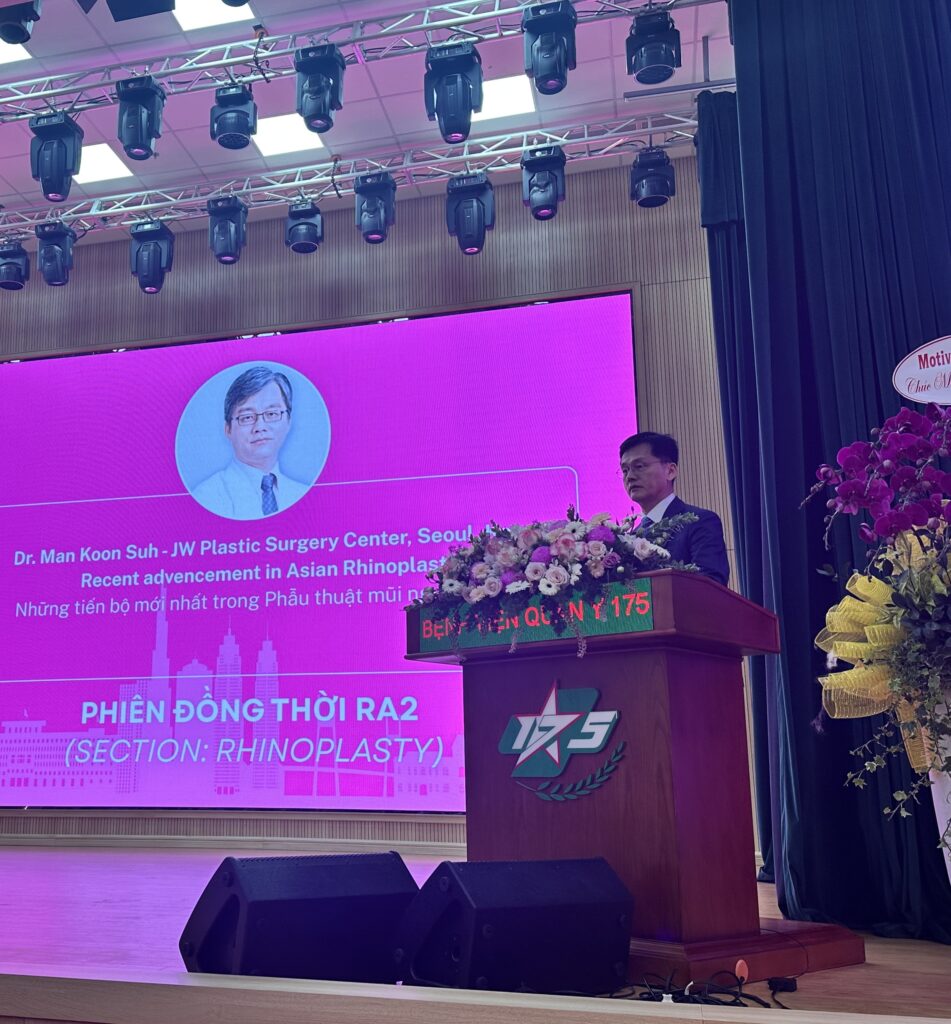
Dr. Man Koon Suh, rhinoplasty specialist and director of JW Plastic Surgery in Seoul, South Korea, was invited as a keynote speaker at the Ho Chi Minh Aesthetic Plastic Surgery Society meeting held in Ho Chi Minh City, Vietnam.
During the two-day academic event, Dr. Suh delivered a 40-minute keynote lecture titled “Recent Advances in Rhinoplasty,” sharing his latest clinical experience and research in high-precision nose surgery, including 3D-printed implants, INNORIB 3D diced rib cartilage rhinoplasty, rib cartilage–based primary and revision rhinoplasty, contracted nose correction, and keystone-preserving hump correction techniques.
World-Recognized Rhinoplasty Specialist From Korea
Dr. Man Koon Suh is internationally known as a surgeon who focuses his practice exclusively on rhinoplasty, with dozen thousands surgeries performed for patients from Korea and around the world.
He currently serves as:
- Director of JW Plastic Surgery Center in Seoul.
- Rhinoplasty Section Editor for Aesthetic Plastic Surgery and Cosmetic Section Editor for Archives of Plastic Surgery
- Former President of the Association of Korean Rhinoplasty Surgeons and President of the Seoul Rhinoplasty Forum
- Co-founder of the Rhinoplasty Society of Asia (RSA)
He is also the author of major textbooks such as Asian Rhinoplasty, Atlas of Asian Rhinoplasty and State of the Art Rhinoplasty Techniques, which are widely referenced by surgeons specializing in Asian rhinoplasty techniques worldwide.
These credentials have positioned Dr. Suh as one of the leading voices in cutting-edge rhinoplasty for Asian patients, making his invited keynote in Ho Chi Minh City a significant academic milestone for the region’s plastic surgery community.
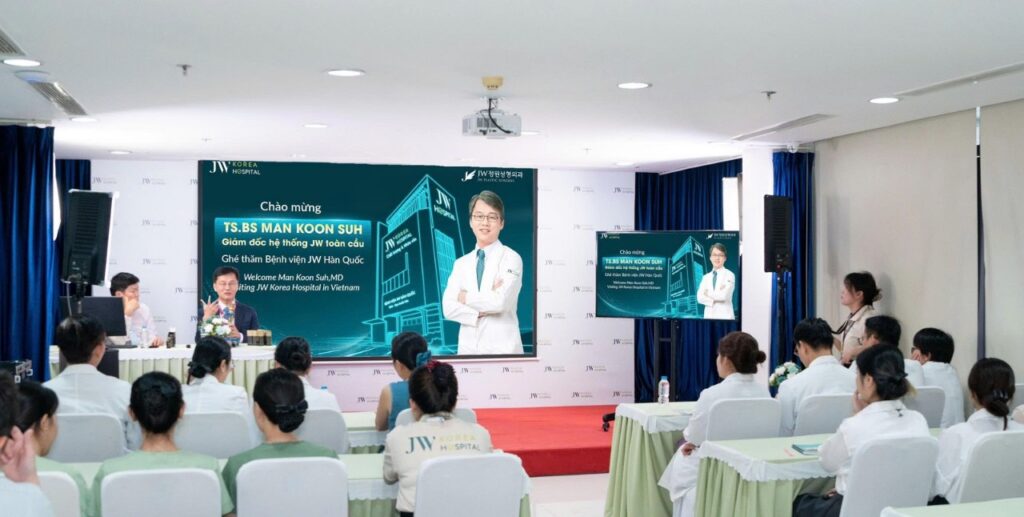
Keynote Topic: “Recent Advances in Rhinoplasty”
In his 40-minute keynote, Dr. Suh outlined several next-generation approaches that are reshaping the field of rhinoplasty, particularly for Asian facial anatomy:
1. 3D-Printed Customized Nasal Implants (INNOFIT)
Dr. Suh discussed how virtual 3D surgery combined with 3D printing allows surgeons to design patient-specific nasal implants that closely match each individual’s bone and cartilage structure. His clinical research on patient-specific nasal implants has shown excellent anatomical fit and high patient satisfaction, with implants remaining stably aligned to the nasal bone even one year after surgery.
At JW Plastic Surgery, this concept is applied through INNOFIT, a 3D-printed customized implant system designed especially for Asian rhinoplasty and complex bridge augmentation cases.
2. INNORIB 3D — Diced Rib Cartilage With a 3D-Printed Mold
Another highlight of the lecture was INNORIB 3D, a technique that combines autologous rib cartilage with a personalized 3D-printed mold. The rib cartilage is finely diced and glued inside the mold, creating a soft yet stable dorsal implant that:
- Provides high fit accuracy to the patient’s nasal framework
- Has an extremely low absorption rate compared with conventional diced cartilage
- Reduces the risk of warping and irregular contour over time
- This method is particularly valuable for revision rhinoplasty and complex cases where structural support, long-term stability, and a natural look are critical.
3. Rib Cartilage Rhinoplasty for Complex and Revision Cases
Dr. Suh emphasized the role of rib cartilage rhinoplasty as a reliable solution for:
- Patients with thin skin needing solid yet smooth dorsal support
- Severe contracted nose (short, upturned)
- Multiple previous surgeries where septal or ear cartilage is insufficient
By combining rib cartilage with 3D-guided planning and customized implants, surgeons can achieve strong support with a refined contour, while minimizing classic rib-cartilage complications like warping.
4. Contracted Nose (Short Nose) Correction
The keynote further explored Dr. Suh’s approach to contracted nose correction, which often arises after overly aggressive previous surgeries or implant-related complications. He discussed:
- Releasing scarred soft tissue
- Reconstructing tip and septal support with cartilage grafts
- Using customized 3D-printed or INNORIB implants to restore dorsal contour and length
This structured, step-by-step method is designed to restore both function and aesthetics in some of the most challenging revision cases.
5. Keystone-Preserving Hump Correction
Dr. Suh also presented his technique for keystone-preserving hump correction, which maintains the stability of the keystone area (where the nasal bones meet the upper lateral cartilages). By preserving this critical junction, the surgery can:
- Reduce the risk of dorsal irregularity
- Maintain nasal structural integrity
- Offer more natural and durable outcomes in hump reduction cases
He has previously shared clinical insights on keystone-preserving rhinoplasty through academic content and educational videos aimed at both surgeons and patients.
Strengthening Academic Exchange Between Korea and Vietnam
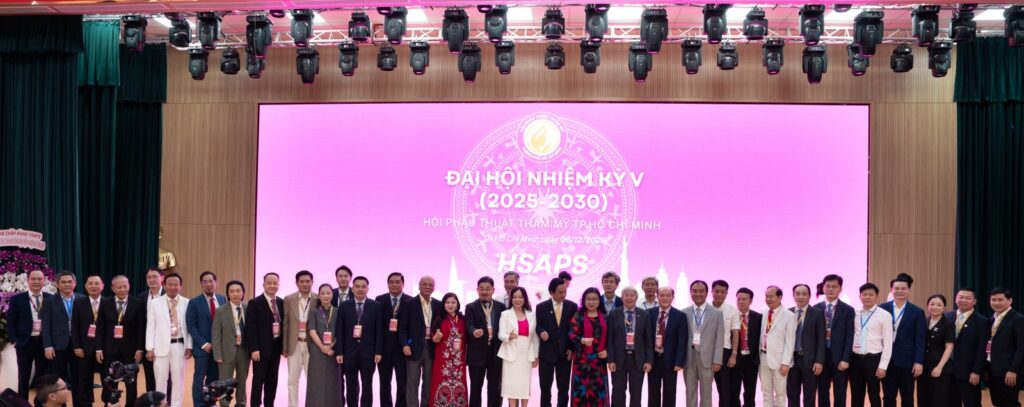
The Ho Chi Minh Aesthetic Plastic Surgery Society meeting brought together surgeons from across Vietnam and neighboring countries, with Dr. Suh’s keynote serving as a centerpiece session on contemporary rhinoplasty innovation.
By showcasing 3D-printed implants, INNOFIT/INNORIB systems, rib cartilage–based solutions, and advanced revision techniques, the lecture aimed to:
- Share evidence-based protocols for safer, more predictable rhinoplasty
- Encourage international collaboration on 3D technologies in facial plastic surgery
- Help local surgeons adopt patient-specific planning and functional–aesthetic balance in nose surgery