

For decades, rhinoplasty has relied on either mass-produced silicone implant, manually sculpted cartilage grafts or traditional “sausage like” glued diced rib cartilage. While these methods are not unable to produce good results, they also have limitations in precision, customization, and predictability.
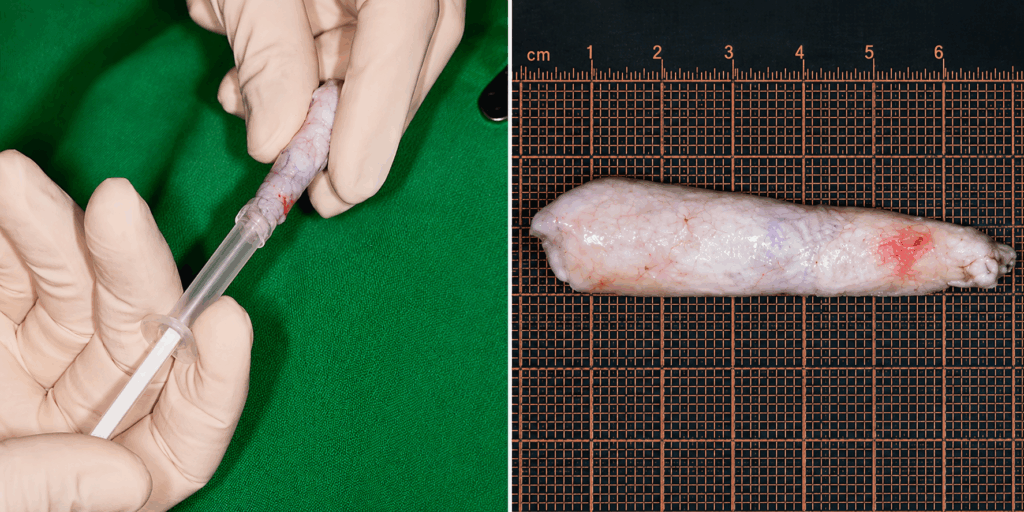
1. Traditional Glued Diced Cartilage
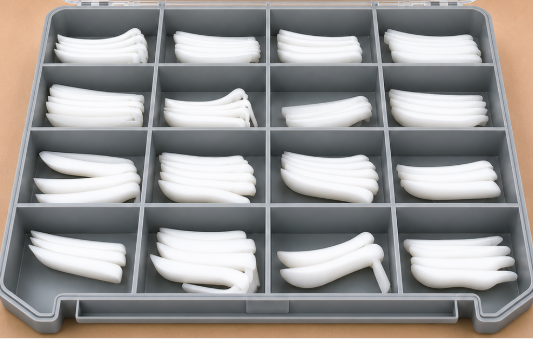
2. Traditional, prefabricated silicone nasal implants
Today, developments in virtual surgical planning and 3D-printing technology are changing the way rhinoplasty is performed. Instead of adapting a patient’s anatomy to fit a pre-made implant, surgeons can now design a custom solution specifically for each individual.
At JW Plastic Surgery, these innovations have led to the development of two advanced rhinoplasty techniques:
- INNOFIT: Customized 3D-Printed Implant Rhinoplasty
- INNORIB: Customized 3D-Printed Glued Diced Rib Cartilage Rhinoplasty
Both methods use 3D imaging, virtual surgical simulation, and patient-specific manufacturing to achieve a higher degree of personalization than any conventional rhinoplasty.
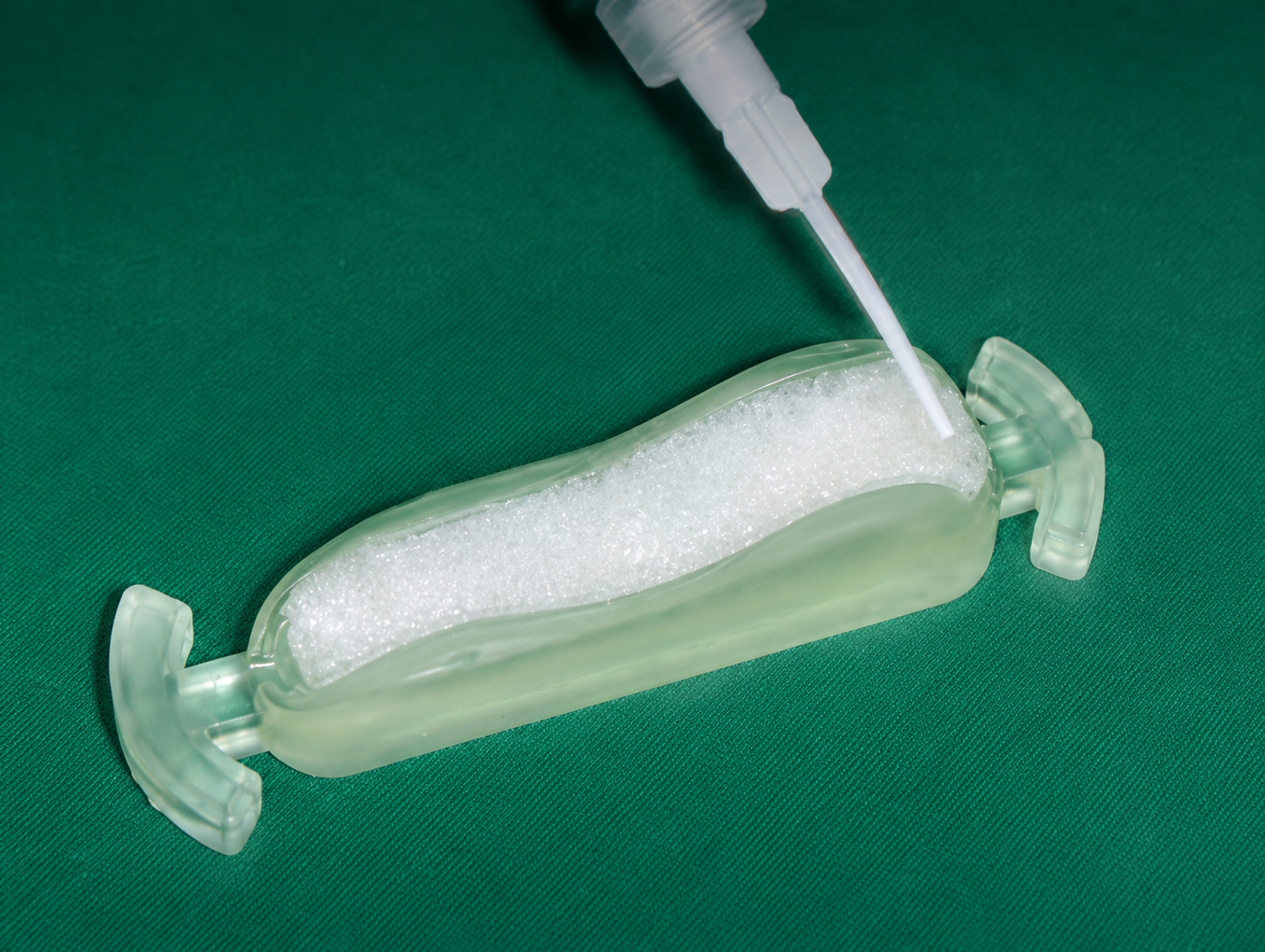
3. InnoRIB 3D Printed Mold with Glued Diced Cartilage
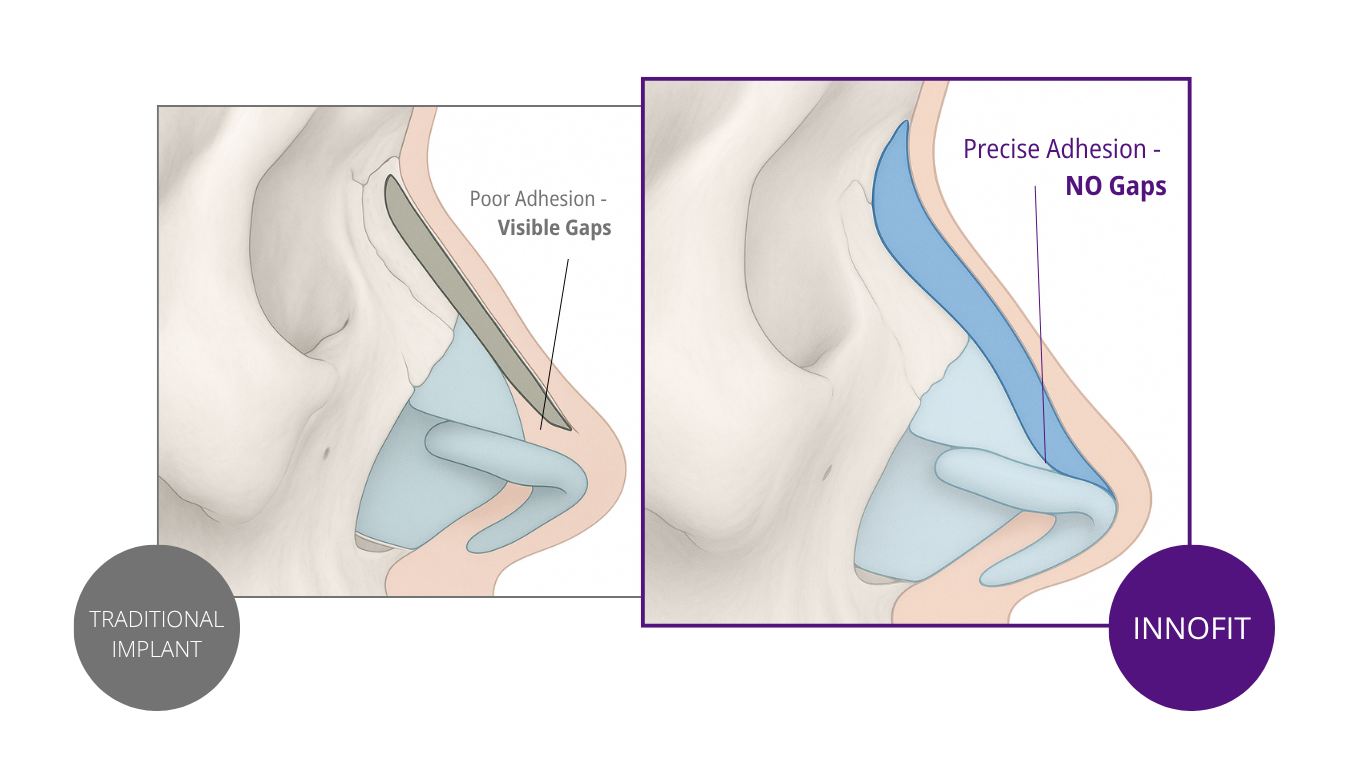
4. Traditional Silicone Implants vs Innofit 3D Printed Implant
Why Traditional Rhinoplasty Has Limitations
Every nose is unique. However, traditional silicone implants are manufactured in standardized shapes and sizes.
Similarly, traditional rib cartilage or glued diced cartilage rhinoplasty depends heavily on manual carving and sculpting by the surgeon. Although experienced surgeons can achieve excellent outcomes, the final shape still strongly relies on intraoperative shaping and individual technique.
Modern patients tend to seek:
- More natural-looking results
- Better harmony with their facial proportions
- Greater predictability of the outcome
- Long-term stability
- Lesser risk of side effects
- Personalized surgical planning
With growing demand for patient-specific rhinoplasty solutions, new, upgraded methods have been developed with assistance of Dr. Man Koon Suh of JW Plastic Surgery Korea. \
The Evolution of 3D Printed Rhinoplasty
The introduction of 3D imaging and virtual surgical planning has fundamentally changed rhinoplasty.
Using high-resolution CT scans and specialized software, surgeons can now create a digital model of a patient’s nose and simulate the desired surgical outcome before entering the operating room.
This digital blueprint serves as the base for creating customized implants or molds that are designed exclusively for a single patient.
The result is a more precise and personalized approach to rhinoplasty, as the implant or mold are produced based on both patient’s individual anatomy and desired result designed by the patient.
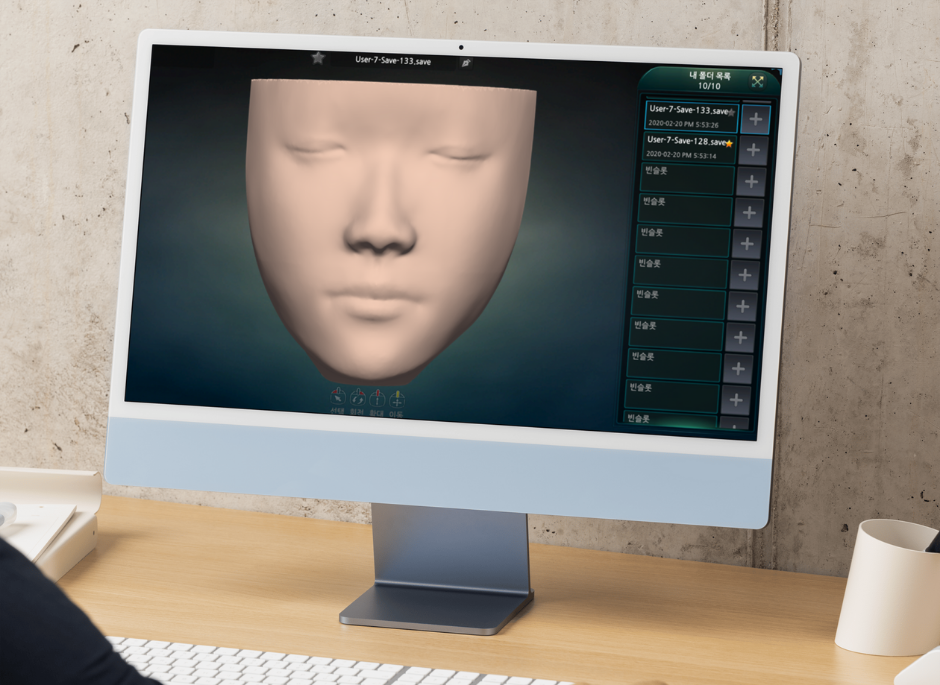
5. “Innofit” Software used for Implant & Mold Design based on 3D Scan
What Is INNOFIT?
INNOFIT is a patient-specific rhinoplasty system that combines:
- 3D-CT imaging
- Virtual surgical planning
- Customized 3D printing
Instead of selecting a pre-made implant from a catalog, the implant is designed based on the patient’s unique anatomy and aesthetic goals.
The entire process begins with a detailed analysis of the nasal structure and facial proportions based on a high-quality 3D CT scan. Using virtual simulation software, the surgeon designs the desired nasal shape and projection. A customized implant is then manufactured according to this plan.
Instead of finding an implant that fits the patient, INNOFIT creates an implant designed specifically for the patient.
Step-by-Step: INNOFIT Customized Rhinoplasty
Step 1: 3D Facial and Nasal Analysis
A high-resolution CT scan is performed to evaluate:
- Nasal bones
- Existing cartilage structures
- Skin thickness
- Facial proportions
This information creates a precise digital model of the patient’s anatomy.
Step 2: Virtual Surgical Planning
The surgeon designs the desired nasal shape using specialized software.
Height, projection, contour, and overall nasal balance can be adjusted digitally before surgery.
Step 3: Customized Implant Design
The virtual plan is converted into a patient-specific implant blueprint.
Every dimension is tailored to the individual.
Step 4: 3D Printing Production
A customized implant is manufactured according to the digital design.
Step 5: Surgery
The implant is placed according to the preoperative plan, helping achieve a result that closely follows the virtual design.
What Is INNORIB?
INNORIB takes customization one step further.
Instead of using a synthetic implant, this technique utilizes the patient’s own rib cartilage.
However, unlike conventional glued diced rib cartilage rhinoplasty, the cartilage is not simply shaped manually inside the harvested fascia.
The harvested rib cartilage is:
- Finely diced into small particles
- Combined using surgical adhesive
- Shaped inside a patient-specific 3D-printed mold
The result is a customized cartilage implant created from the patient’s own tissue and designed according to the virtual surgical plan.
This innovative approach combines the advantages of autologous rib cartilage with the precision of modern 3D technology.
Step-by-Step: INNORIB 3D-Printed Glued Diced Rib Cartilage Rhinoplasty
Step 1: 3D CT Scan and Analysis
Detailed imaging is performed to evaluate the patient’s anatomy and create a digital model of the nose.
Step 2: Virtual Surgical Planning
The desired nasal shape is designed digitally by the patient and adjusted during the consultation with the doctor.
Every angle, contour, and projection can be imagined before surgery.
Step 3: Customized Mold Creation
A patient-specific mold is created using 3D-printing technology.
This mold is unique to the individual patient and reflects the planned surgical outcome.
Step 4: Rib Cartilage Harvesting
The patient’s rib cartilage is carefully harvested.
Step 5: Cartilage Preparation
The cartilage is diced into tiny particles.
Step 6: Glued Diced Cartilage Formation
The diced cartilage is mixed with surgical adhesive. Then it is placed inside the customized 3D-printed mold.
This is the key distinction between traditional diced rib cartilage rhinoplasty and INNORIB.
The mold allows surgeons to achieve:
- Better reproduction of the planned design
- Better consistence with anatomical features
- More options of customization
- More natural-looking result
- Minimized risk of side effects
Step 8: Implantation
The glued diced rib cartilage shaped in 3D printed mold is inserted during rhinoplasty surgery.
INNORIB Is NOT Traditional Diced Rib Cartilage Rhinoplasty
One of the most common misconceptions is that INNORIB is simply another form of diced rib cartilage rhinoplasty.
In reality, the two techniques are fundamentally different.
Traditional diced rib cartilage relies primarily on manual shaping by the surgeon.
INNORIB incorporates:
- 3D-CT imaging
- Virtual surgical planning
- Computer-assisted design
- Customized 3D-printed molds
- Precision-guided cartilage shaping
The objective is not merely to build a nasal bridge, but to reproduce a carefully planned design with a much higher degree of accuracy and customization.
Scientific Evidence Supporting 3D Rhinoplasty
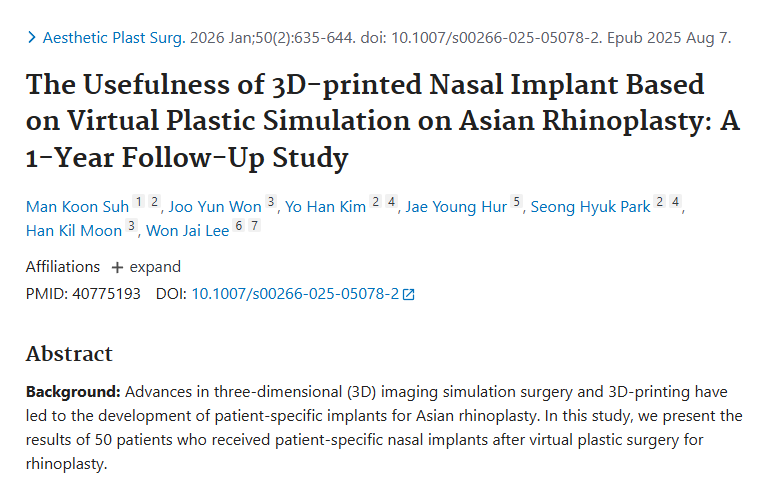
6. Article in Aesthetic Plastic Surgery Journal
The growing interest in patient-specific rhinoplasty is supported by scientific research.
In a 1-year follow-up study published in Aesthetic Plastic Surgery, researchers evaluated customized 3D-printed nasal implants designed using virtual surgical simulation.
The study demonstrated:
- Approximately 60% improvement in patient satisfaction scores (ROE)
- Excellent long-term stability
- Extremely small deviations between planned and postoperative results
- Average differences ranging from only 0.01 to 0.61 mm from the virtual surgical design
These findings suggest that personalized 3D planning may significantly improve the predictability and accuracy of rhinoplasty outcomes.
Comparison of Modern Rhinoplasty Techniques
| Feature | Traditional Silicone Implant | INNOFIT 3D Customized Implant | Traditional Glued Diced Rib Cartilage | INNORIB 3D Molded Glued Diced Rib Cartilage |
|---|---|---|---|---|
| Customization Level | Low | Extremely High | Low | Extremely High |
| Based on 3D-CT Analysis | No | Yes | No | Yes |
| Virtual Surgical Planning | No | Yes | No | Yes |
| Patient-Specific Design | No | Yes | Limited | Yes |
| Uses Patient’s Own Tissue | No | No | Yes | Yes |
| 3D-Printed Technology | No | Yes | No | Yes |
| Shape Accuracy | Standardized | Very High | Surgeon-dependent | Very High |
| Facial Harmony | Moderate | High | High | Very High |
| Risk of Rejection | Possible | Possible | No | No |
| Risk of Cartilage Warping | N/A | N/A | Possible | Reduced |
| Long-Term Stability | Good | Excellent | Good | Excellent |
| Suitable for Revision Rhinoplasty | Moderate | Good | Moderate | Excellent |
| Ability to Reproduce Planned Design | Limited | Very High | Moderate | Very High |
| Surgery Time | Approximately 2–3 Hours | Approximately 2–3 Hours | Approximately 4 Hours | Approximately 4 Hours |
| Recommended Stay in Korea | About 7 Days | About 9 Days | About 7 Days | About 9 Days |
| Implant Manufacturing Process | Standard Ready-Made Implant | Customized 3D-Printed Implant | Manual Cartilage Sculpting | Customized 3D-Printed Mold Creation |
| Predictability of Final Shape | Moderate | Very High | Moderate | Very High |
| Best For | Patients seeking a straightforward augmentation | Patients seeking highly customized implant rhinoplasty | Patients preferring autologous tissue | Patients seeking maximum customization using their own rib cartilage |
The Future of Personalized Rhinoplasty
Rhinoplasty is entering a new era.
Advances in virtual surgical planning and 3D-printing technology are allowing surgeons to move beyond standardized implants and traditional shaping techniques toward truly patient-specific solutions.
INNOFIT and INNORIB represent this evolution.
Whether through a customized 3D-designed implant or a personalized autologous cartilage implant shaped within a patient-specific mold, both techniques aim to achieve the same goal:
A nose designed specifically for the individual patient, with greater precision, predictability, and harmony than ever before.
As technology continues to advance, personalized 3D rhinoplasty may become the new standard for patients seeking the highest level of customization in nasal surgery.
If you are curious if Innofit or InnoRIB techniques is the right solution for your nose contact our consultants and get your own recommendation.
References
- Suh MK, Won JY, Kim YH, Hur JY, Park SH, Moon HK, Lee WJ. The Usefulness of 3D-Printed Nasal Implant Based on Virtual Plastic Simulation on Asian Rhinoplasty: A 1-Year Follow-Up Study. Aesthetic Plastic Surgery, 2026.
- Suh MK, Won JY, Baek JH. Paradigm Shift in Rhinoplasty with Virtual 3D Surgery Software and 3D Printing Technology. Arch Plast Surg. 2024
- Yi HG, Choi YJ, Kang KS, et al. Three-Dimensional Printing of a Patient-Specific Engineered Nasal Cartilage for Augmentative Rhinoplasty. Journal of Tissue Engineering, 2019.
- Chowdhury R, Al-Musaileem N, Raman KS, Al-Majid D, Solomon P, Rival R. 3D Printing in Nasal Reconstruction: Application-Based Evidence on What Works, When, and Why. Biomedicines. 2025
- JW Plastic Surgery. 3D Printed INNORIB Diced Rib Cartilage Rhinoplasty.
- JW Plastic Surgery. Innovative 3D Printed Nasal Implants Set to Revolutionize Plastic Surgery.
- JW Plastic Surgery. Rib Cartilage Rhinoplasty.